Healthy Aging · Nutrition

Protein and Muscle Health After 60

What Changes — and What Actually Helps

A science-based guide to protein, nutrition, physical activity and maintaining muscle health as we age.

Science-Based Guide Healthy Aging Updated September 2026

Muscle health becomes increasingly important as we age. Strong, functional muscles help us move comfortably, perform everyday activities and maintain independence. But aging can also change the way muscle responds to nutrition and physical activity.

Protein is an important part of the picture, but simply adding more protein is not the whole story. Total protein intake, protein quality, how protein is distributed throughout the day, physical activity and overall health can all influence nutritional needs later in life.

In this guide, we'll look at what happens to muscle as we get older, what research tells us about protein for older adults, and where food, exercise and supplements may fit into a healthy-aging strategy.

Key takeaway

Aging does not mean that muscle stops responding to nutrition or exercise. The response can change, which makes the combination of adequate nutrition and regular physical activity especially important later in life.

The Big Picture

Why Does Muscle Change as We Age?

Muscle is constantly adapting. Throughout life, muscle proteins are being built and broken down — and nutrition and physical activity help influence that balance.

As we get older, several gradual changes can affect muscle tissue. Muscle mass and strength may decline over time, particularly when aging is combined with lower physical activity, inadequate nutrition or periods of illness and inactivity.

Another important change involves the way older muscle responds to nutrients. After eating protein, amino acids become available for many functions throughout the body, including the process of building and repairing muscle proteins.

Research suggests that older muscle may sometimes show a reduced response to the same nutritional stimulus compared with younger muscle. Scientists commonly refer to this phenomenon as anabolic resistance.

This does not mean that older muscles stop responding. Rather, it helps explain why adequate nutrition and regular physical activity become particularly relevant as we age.
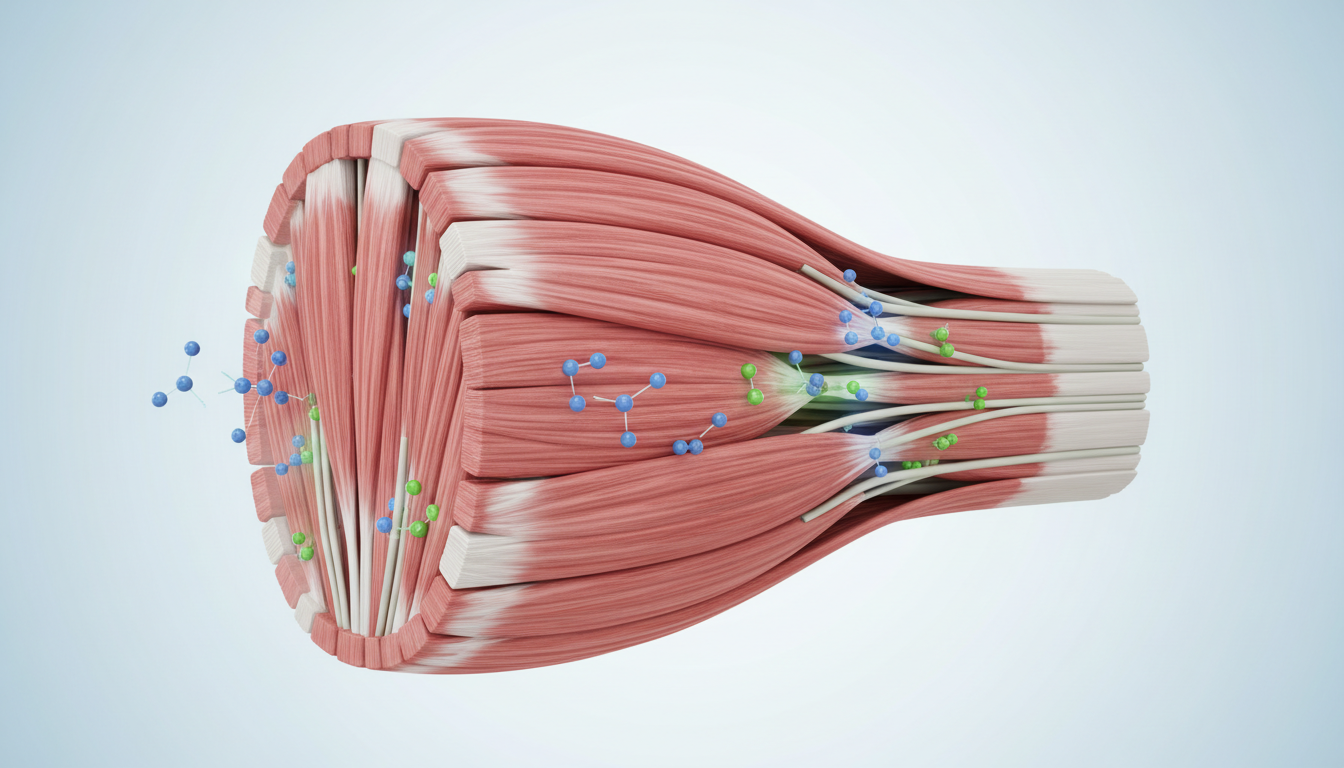
Scientific illustration of skeletal muscle fibers and amino acids
Muscle & Amino Acids Dietary protein provides amino acids that the body can use for muscle protein synthesis and many other physiological processes. Illustration for educational purposes.
1

Muscle Changes Over Time

Changes in muscle mass, strength and function can occur gradually with age, although the degree varies considerably from person to person.

2

Protein Response Can Change

Older muscle may require a stronger nutritional stimulus to produce a similar muscle protein-building response.

3

Activity Still Matters

Physical activity — particularly resistance exercise — remains an important stimulus for maintaining muscle strength and function later in life.

Good to Know What Is
Anabolic Resistance?

Anabolic resistance describes a reduced muscle protein-building response to anabolic stimuli such as dietary protein or amino acids.

Think of it as a change in sensitivity rather than an inability to respond.

Protein + Amino Acids Nutrients become available after a meal.
→
Muscle Protein Synthesis Muscle uses available amino acids to build muscle proteins.
✓
What the science tells us

Aging can alter the muscle response to protein, but older muscle retains the ability to respond to nutrition and exercise. This is one reason researchers pay attention not only to total protein intake, but also to physical activity, protein quality and how protein is consumed throughout the day.

Nutrition & Muscle

Why Protein Matters More After 60

Protein provides the amino acids our bodies use to build and maintain tissues throughout life. As muscle response changes with age, getting enough high-quality protein becomes an increasingly important part of supporting muscle health.

When we eat protein-containing foods, digestion breaks those proteins down into smaller components, including amino acids. These amino acids enter the body's amino acid pool and can be used for many physiological processes — including the synthesis of new muscle proteins.

Muscle protein is continually being renewed. At different times throughout the day, muscle proteins are being built and broken down. Meals containing protein and physical activity can stimulate muscle protein synthesis, helping influence that ongoing balance.

Because older muscle can show a reduced response to smaller amounts of protein, researchers have investigated whether factors such as total daily protein intake, protein quality and how protein is distributed across meals may become especially relevant later in life.
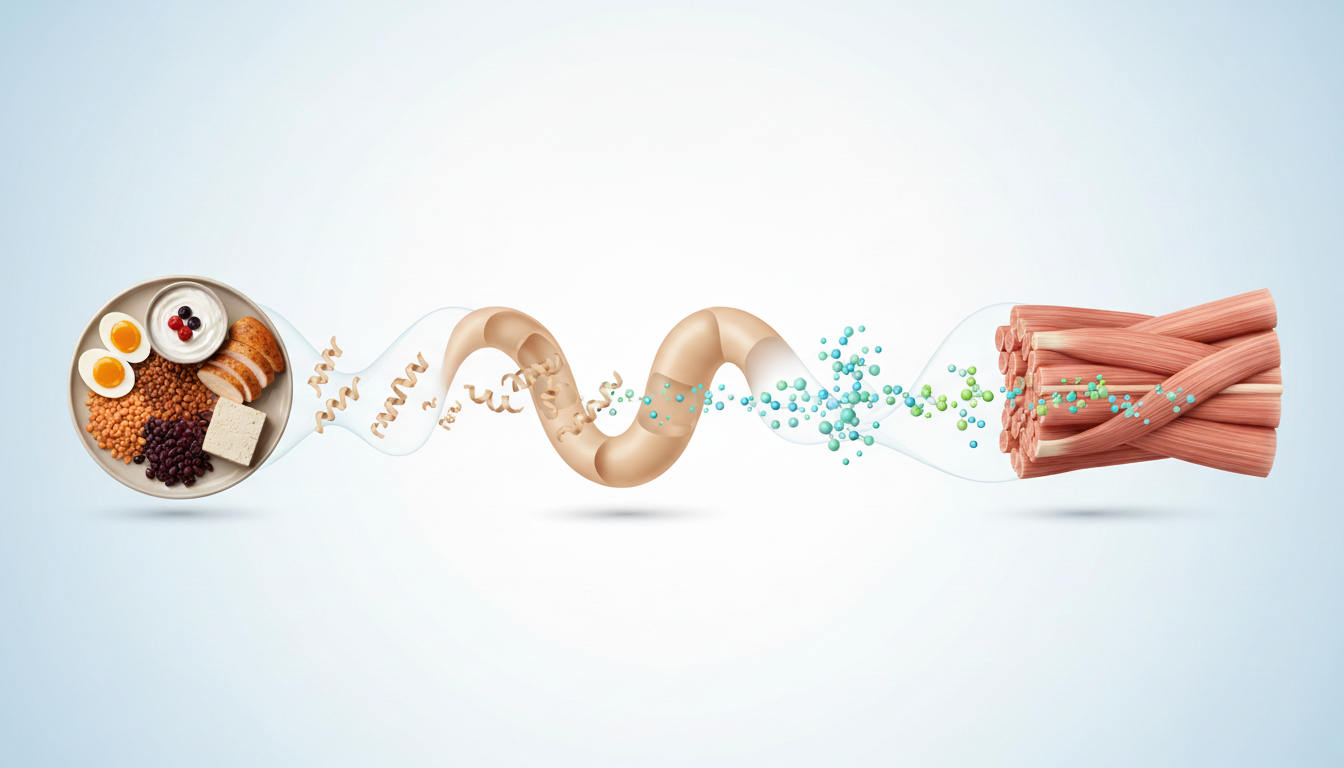
From Your Plate to Your Muscles What Happens to Dietary Protein?
How dietary protein is digested into amino acids and made available for muscle protein synthesis
+

Protein Does More Than Support Muscle

Protein and amino acids are used throughout the body. They contribute to the structure and function of tissues and are involved in enzymes, transport proteins, immune functions and many other biological processes. Muscle health is important, but it is only one part of protein's role in human nutrition.

≠

More Isn't Automatically Better

Protein needs are not identical for everyone. Body size, physical activity, overall diet, health status and other individual factors can influence appropriate intake. The goal is not simply to consume as much protein as possible, but to meet nutritional needs appropriately.

The bigger picture

Maintaining muscle health after 60 is not about one nutrient in isolation. Adequate protein works within a broader pattern that includes sufficient energy intake, a balanced diet and regular physical activity — particularly activities that challenge the muscles.

Next So, how much protein do older adults actually need?
Practical Guide

How Much Protein Do Older Adults Actually Need?

There is no single protein target that is right for every older adult. But expert guidelines give us a useful starting point for understanding typical needs.

Protein recommendations are usually expressed in grams of protein per kilogram of body weight per day (g/kg/day). This allows the estimate to account, at least partly, for differences in body size.

The European Society for Clinical Nutrition and Metabolism (ESPEN) recommends that protein intake in older people should generally be at least 1.0 g/kg of body weight per day, with the amount adjusted according to factors such as nutritional status, physical activity, health status and individual tolerance.

Commonly Suggested Range 1.0–1.2 grams of protein
per kg of body weight
per day

For Healthy Older Adults

Several expert groups have suggested approximately 1.0–1.2 g/kg/day for healthy older adults as a practical range for supporting nutritional needs and helping preserve lean body mass and function.

This is a general reference range — not an individual prescription. Appropriate intake can vary according to health, activity, nutritional status and other factors.

Put It Into Perspective

What Does 1.0–1.2 g/kg Look Like?

Examples below show total daily protein, not protein per meal.

55 kg
≈ 121 lb
55–66 g
protein per day
65 kg
≈ 143 lb
65–78 g
protein per day
75 kg
≈ 165 lb
75–90 g
protein per day
85 kg
≈ 187 lb
85–102 g
protein per day
The basic calculation Body weight in kilograms × 1.0–1.2 = approximate grams of protein per day within this general reference range.

Why Isn't There One Perfect Number?

Protein requirements can be influenced by physical activity, overall energy intake, nutritional status, illness, recovery needs and other individual factors. That's why guidelines emphasize individualization rather than one universal target.

What About Higher Protein Intakes?

Expert guidance discusses higher protein needs in some older adults with acute or chronic illness, malnutrition or other increased metabolic demands. Those situations should not be treated as a general recommendation for every healthy adult over 60.

Important: individual needs can be different

These figures are educational reference values, not personalized medical or dietary advice. People with kidney disease, medically prescribed protein restrictions, significant health conditions or special nutritional needs should discuss appropriate protein intake with a qualified healthcare professional.

Scientific context: ESPEN Practical Guideline on Clinical Nutrition and Hydration in Geriatrics (2022) and the PROT-AGE Study Group. Full scientific references are provided at the end of this article.
Protein Throughout the Day

Does It Matter When You Eat Your Protein?

Total daily protein matters, but researchers have also explored whether the way protein is distributed across meals may influence muscle protein synthesis in older adults.

Many people do not eat protein evenly throughout the day. Breakfast may contain relatively little, lunch somewhat more, and dinner may provide the largest share of daily protein.

Because eating protein provides amino acids that can stimulate muscle protein synthesis, researchers have investigated whether including meaningful sources of protein at several meals may provide repeated opportunities to support the muscle protein-building response.

The evidence does not support a single perfect protein schedule for everyone. Total daily protein intake remains an important priority, while meal distribution can be considered another practical part of the overall strategy.

A Practical Way to Think About It

Protein Across the Day

Rather than relying almost entirely on one large protein-rich meal, consider opportunities to include protein at different meals throughout the day.

☀

Breakfast

Eggs, Greek yogurt, cottage cheese, milk, soy foods or another protein-rich option.

→
◐

Lunch

Fish, poultry, beans, lentils, tofu, dairy or other protein-rich foods.

→
☾

Dinner

Another opportunity to combine a quality protein source with vegetables, grains and other nutrient-rich foods.

Distribution vs. Concentration

These are patterns, not strict meal prescriptions.

Common Pattern

Most Protein at Dinner

A low-protein breakfast followed by progressively larger amounts later in the day can result in much of the day's protein being concentrated in one meal.

Alternative Pattern

Protein at Several Meals

Including meaningful protein sources at breakfast, lunch and dinner spreads protein intake across more eating occasions and may provide repeated nutritional stimuli throughout the day.

≠
There Is No Universal “Perfect” Amount Per Meal

Studies have examined per-meal protein doses and protein distribution, but individual responses vary and the long-term evidence is more complex than a simple rule such as “everyone over 60 needs exactly X grams at every meal.” Body size, total daily intake, protein quality, activity and health status all matter.

A Simple Daily Check
01

Does breakfast include a meaningful source of protein?

02

Is most of your protein concentrated at dinner?

03

Are you meeting your overall daily protein needs?

Key takeaway

You do not need to turn every meal into a protein calculation. A practical starting point is to meet appropriate daily protein needs and include quality protein sources at multiple meals rather than automatically concentrating most of the day's protein at dinner.

Food & Nutrition

What Are the Best Protein Sources After 60?

There is no single “best” protein food. A strong nutrition pattern can include a variety of animal and plant sources, chosen according to nutritional quality, preferences, tolerance and overall diet.

Whole foods are usually the foundation of a healthy protein intake because they provide much more than protein alone. Depending on the food, they may also provide vitamins, minerals, healthy fats, fiber and other nutrients.

Protein foods also differ in their amino acid composition and digestibility. Many animal-derived proteins provide all nine essential amino acids in proportions that make them useful dietary protein sources.

Plant foods can also contribute substantially to daily protein intake. Eating a varied diet across the day can provide the essential amino acids the body needs without requiring every individual food to have the same amino acid profile.

Variety of animal and plant protein-rich foods including eggs, yogurt, chicken, legumes, tofu, nuts and seeds
✓
Food First — Whenever Practical

Protein-rich foods can contribute protein alongside many other nutrients. Supplements can be useful in some situations, but they are better viewed as tools that may complement an overall diet rather than automatically replacing nutritious foods.

Building Variety

Protein Can Come From Many Foods

Mixing different sources can make it easier to build a nutritious and enjoyable eating pattern.

01

Dairy & Eggs

Eggs, milk, Greek yogurt and cottage cheese can provide high-quality protein along with other important nutrients.

02

Meat, Poultry & Fish

Lean meats, poultry and seafood are concentrated sources of complete dietary protein and several micronutrients.

03

Soy Foods

Tofu, tempeh, edamame and soy-based foods can provide substantial amounts of protein within plant-based eating patterns.

04

Legumes, Nuts & Seeds

Beans, lentils, peas, nuts and seeds contribute protein while also providing fiber and a range of other nutrients.

What Makes a Protein Source Useful?

Protein quality is not determined by a single characteristic. Several factors influence how a food contributes to overall nutrition.

Essential Amino Acids

The body cannot make the nine essential amino acids in sufficient amounts, so they must come from the diet.

Digestibility

Protein sources differ in how efficiently their proteins are digested and their amino acids become available to the body.

The Whole Food Matters

Protein foods should also be considered in the context of the vitamins, minerals, fiber, fats and calories they contribute to the overall diet.

What About Plant Protein?

Plant-based diets can provide adequate protein when they include sufficient total protein and a variety of protein-rich foods. Individual plant proteins differ in amino acid composition and digestibility, which makes variety and overall dietary intake important considerations.

Practical Perspective Think Beyond a Single “Perfect” Protein Food

A sustainable approach is to include protein-rich foods you enjoy and tolerate across the day while paying attention to total protein intake and overall diet quality. The best choice is one that fits within a nutritionally adequate eating pattern you can realistically maintain.

Movement & Muscle

Why Resistance Exercise Matters After 60

Nutrition provides the building blocks, but muscle also needs a reason to adapt. Resistance exercise provides an important physical stimulus for maintaining strength and muscle function as we age.

Muscle tissue responds to the demands placed on it. Activities that challenge muscles against resistance can stimulate adaptations involved in maintaining strength and physical function.

This matters throughout adulthood, but it becomes particularly relevant later in life as age-related changes in muscle are often combined with lower levels of physical activity.

Resistance exercise can also interact with nutrition. Both exercise and dietary protein can stimulate processes involved in muscle protein synthesis, which is why researchers often consider nutrition and physical activity together rather than treating either one as a complete strategy on its own.

Active older adult performing resistance exercise with light weights
Two Parts of the Muscle-Health Picture
N
Nutrition

Protein provides essential amino acids used throughout the body.

+
R
Resistance Exercise

Challenging the muscles provides a powerful adaptive stimulus.

→
M
Muscle Health

Both belong within a broader strategy for supporting strength and function.

Why Is Resistance Exercise So Important?

01 Strength

Progressive resistance exercise can help improve or maintain muscular strength, which supports many everyday physical tasks.

02 Physical Function

Stronger muscles can contribute to activities such as standing up, climbing stairs, carrying objects and moving confidently through daily life.

03 Muscle Adaptation

Older muscle retains the ability to respond to appropriate exercise, although individual responses and training needs can vary.

It Doesn't Have to Mean Heavy Lifting

What Counts as Resistance Exercise?

Resistance can come from many sources. The appropriate type and intensity depend on experience, ability, health status and individual goals.

Free Weights
Resistance Bands
Weight Machines
Body-Weight Exercises
Sit-to-Stand Exercises
Supervised Strength Training
Walking Is Valuable — But It Is Not the Same Stimulus

Walking and other aerobic activities can be valuable components of an active lifestyle. Resistance exercise, however, places a different type of demand on muscle. A well-rounded activity pattern can include both rather than treating one as a replacement for the other.

Start at an Appropriate Level

Exercise should be matched to individual ability and health status. People who are new to resistance training, have significant mobility limitations, cardiovascular concerns, recent injuries or other medical conditions may benefit from guidance from an appropriately qualified healthcare or exercise professional before beginning a new program.

Key takeaway

Protein and amino acids are important nutritional components, but nutrition alone is not the entire muscle-health strategy. Regular resistance exercise provides a distinct stimulus that helps muscles adapt and supports strength and physical function throughout healthy aging.
Supplements & Nutrition

When Might a Protein or Amino Acid Supplement Be Useful?

Supplements are not automatically necessary after 60. But in some situations, they can provide a convenient way to complement an eating pattern when meeting nutritional goals through food alone is difficult or impractical.

A balanced diet built around nutrient-rich foods remains an important foundation. Protein supplements and amino acid products should therefore be viewed as tools rather than replacements for an overall healthy diet.

Whether a supplement is useful depends on the problem it is intended to solve. Someone looking for a convenient way to add substantial dietary protein may have different needs from someone comparing isolated amino acid products.

✓
Start With the Nutrition Gap — Not the Supplement

Before choosing a product, consider what is actually missing. Is total protein intake low? Is eating enough protein difficult? Is convenience the main problem? Understanding the nutritional goal makes it easier to evaluate whether a supplement adds meaningful value.

When Might Supplementation Be Practical?

There is no universal checklist, but several practical circumstances can make supplemental protein or amino acids worth discussing.

01
Difficulty Meeting Protein Needs

Some people may find it challenging to obtain their intended protein intake consistently through regular meals.

02
Reduced Appetite

Eating large meals can become difficult for some older adults, making convenient nutrient sources potentially useful in selected situations.

03
Convenience

A supplement may be easier to use when cooking, shopping or preparing a protein-rich meal is impractical.

04
Specific Dietary Preferences

Dietary restrictions, preferences or tolerance can sometimes make certain supplemental formats more practical than particular foods.

Know What You're Comparing

Protein Powder, EAA and BCAA Are Not the Same Thing

These products may appear in the same supplement aisle, but nutritionally they are different. Understanding that distinction is more useful than assuming they are interchangeable.

01

Protein Powder

Products such as whey, casein, soy and formulated plant protein powders provide dietary protein that is digested into amino acids.

Think: A convenient way to add protein to the diet.
02

Essential Amino Acids

EAA products provide essential amino acids in free-form or formulated combinations rather than providing intact dietary protein.

Think: Specific amino acids the body cannot synthesize in sufficient amounts.
03

BCAAs

BCAA products contain three essential amino acids: leucine, isoleucine and valine. They represent only part of the complete essential amino acid group.

Think: Three EAAs — not a complete protein and not the full group of essential amino acids.
Important: Amino Acids Are Not the Same as Protein

Protein foods and complete protein supplements provide amino acids after digestion, but isolated amino acid supplements should not automatically be counted as an equivalent replacement for a nutritionally complete protein-rich food or complete protein source.

What Should You Look for in a Supplement?

01 Clear Label

Understand what the product actually contains and the serving size.

02 Appropriate Purpose

Match the product to the nutritional goal rather than relying on marketing claims.

03 Quality Standards

Look for transparent manufacturing information and credible independent quality verification when available.

04 Realistic Claims

Be cautious with products promising dramatic, guaranteed or unusually rapid results.

Supplements Still Require Context

Individual nutrition needs can differ substantially. People with kidney disease, medically prescribed protein restrictions, significant health conditions, medication concerns or special nutritional needs should discuss supplementation with an appropriately qualified healthcare professional.

Understanding Your Options Protein Powder vs. EAA vs. BCAA

They are often marketed for similar goals, but they are nutritionally different. In our detailed comparison, we break down what each provides, how they differ and what to consider before choosing one.

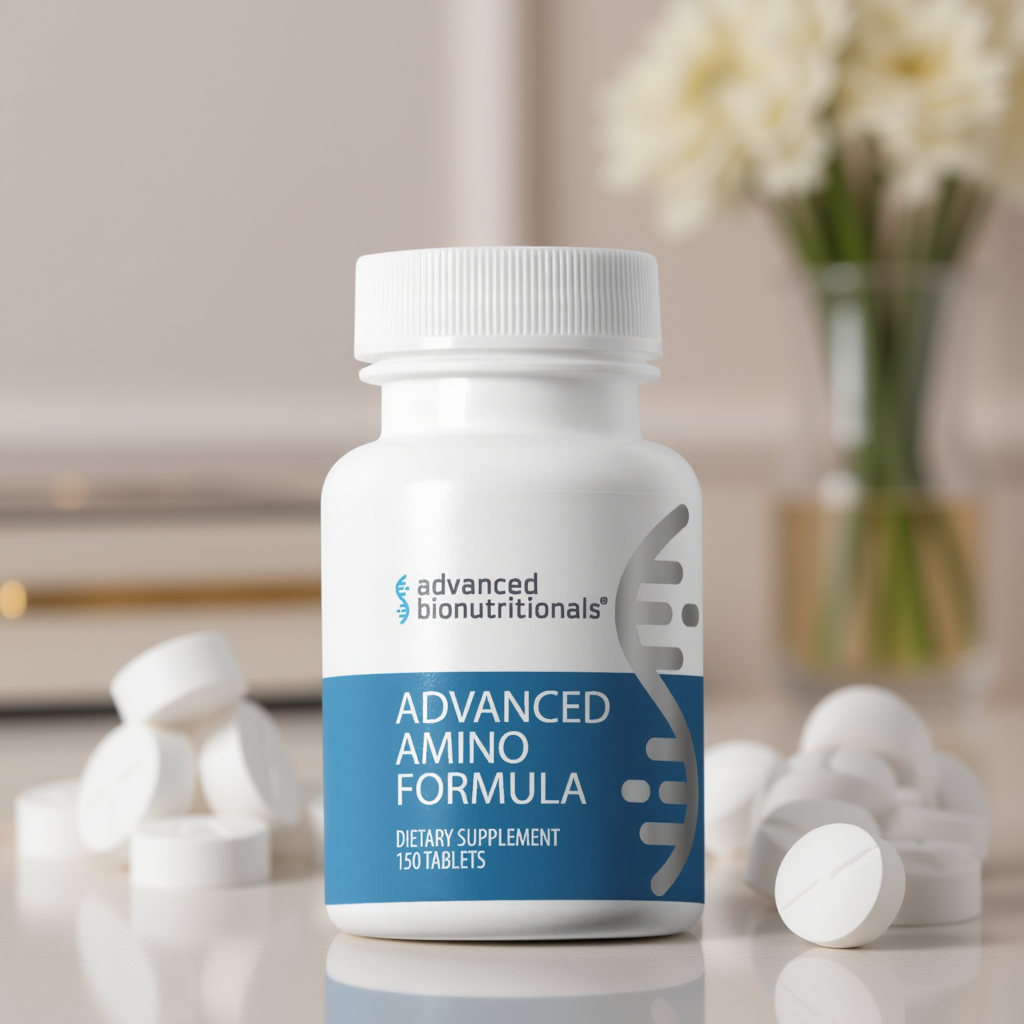
Advanced Amino Formula amino acid supplement
Our Supplement Pick

Advanced Amino Formula

An amino acid supplement — not a protein powder

For readers specifically exploring amino acid supplementation, Advanced Amino Formula provides a combination of eight essential amino acids, including the three branched-chain amino acids leucine, isoleucine and valine.

✓ Eight essential amino acids
✓ Includes leucine, isoleucine and valine
✓ Amino acid supplement in tablet format
✓ An alternative format for people comparing amino acid products
Why we're highlighting it

We included Advanced Amino Formula as an option for readers interested specifically in essential amino acid supplementation. It should be viewed as a supplement to an overall nutrition and activity strategy — not as a replacement for adequate dietary protein or resistance exercise.

Check Availability Visit the official product page for current product and purchasing information.
Affiliate Disclosure: As an affiliate, we may earn a commission from purchases made through links on this page, at no additional cost to you.
Putting It All Together

A Practical Muscle-Health Strategy After 60

Muscle health is not determined by one food, one supplement or one workout. The strongest approach brings several evidence-informed habits together over time.

The science of healthy aging can quickly become complicated, but the practical message is much simpler. Older muscle can still respond to nutrition and physical activity, and several everyday choices can help create an environment that supports strength and function.

Instead of searching for a single solution, it is more useful to think in terms of multiple pieces working together.

The Bigger Picture

Five Pieces of the Muscle-Health Puzzle

Each contributes something different. None needs to work in isolation.

01
Adequate Protein

Aim to meet an appropriate overall daily protein intake.

02
Protein Across Meals

Include quality protein sources at multiple eating occasions.

03
Nutrient-Rich Foods

Build protein intake within an overall balanced eating pattern.

04
Resistance Exercise

Give muscles an appropriate physical stimulus to adapt.

05
Supplements When Useful

Use supplements to address a practical nutritional need — not as a shortcut.

A Simple Starting Point

Where Do You Begin?

You do not need to change everything at once. A few questions can help identify where attention may be most useful.

STEP 1
Look at your current diet

Consider where your protein comes from and whether your overall intake appears consistent with your nutritional needs.

STEP 2
Look at your meals

Notice whether protein-rich foods appear throughout the day or whether most protein is concentrated in one meal.

STEP 3
Look at your activity

Ask whether your routine includes activities that challenge your muscles against resistance.

STEP 4
Identify the actual gap

If meeting nutritional needs through food is difficult, consider whether convenience, appetite, dietary preferences or another practical issue is creating the gap.

STEP 5
Then evaluate supplements

If supplementation makes sense, compare products according to what they actually provide rather than relying on dramatic marketing claims.

Keep Supplements in Context Supplements can fill a gap. They do not replace the rest of the strategy.

Protein powders, essential amino acid products and other supplements can serve different purposes. Their usefulness depends on individual needs, the rest of the diet and what the product actually contains.

A supplement should therefore be evaluated as one component of a broader nutrition and activity pattern — not as a substitute for adequate food intake or appropriate physical activity.

Healthy Aging Is a Long Game Consistency Matters More Than Perfection

A perfectly calculated meal or occasional workout is less meaningful than habits that can realistically be maintained. Sustainable nutrition and regular physical activity create the foundation on which more specific strategies can be built.

The main message

Muscle health after 60 is not about finding a magic ingredient. Adequate nutrition, quality protein, regular resistance exercise and sustainable habits work together. Supplements may have a role when they address a genuine nutritional or practical need, but they remain only one part of the bigger picture.

Final Thoughts

Supporting Muscle Health Is About the Whole Picture

Aging changes muscle, but it does not eliminate the body's ability to respond to nutrition and physical activity. Understanding those changes can help make protein and supplement decisions more practical — and less dependent on marketing claims.

For many older adults, the foundation remains straightforward: obtain adequate nutrition, include quality protein sources, stay physically active and incorporate appropriate resistance exercise when possible.

Supplements can sometimes help address a nutritional or practical gap, but the right question is not simply “Which supplement should I take?” It is first: “What nutritional need am I trying to address?”

The MyVitalChoice Perspective Understand the need first. Compare the evidence. Then decide whether food, lifestyle changes or a supplement makes sense for you.
Continue Learning

Where to Go Next

If you are considering supplementation, the next step is understanding what different products actually provide.

Nutrition Guide

EAA vs. BCAA vs. Protein Powder: What's the Difference?

Learn how complete protein, essential amino acids and branched-chain amino acids differ — and why they should not automatically be treated as interchangeable.

Product Analysis

Advanced Amino Formula Review 2026: Ingredients, Pros, Cons & What to Know

A closer look at the formula, what it contains, how it differs from protein powder and what to consider before deciding whether it fits your nutritional goals.

Editorial Note

MyVitalChoice provides educational health and wellness information and does not replace individualized medical or nutritional advice. Recommendations and nutritional needs may vary according to health status, medications, dietary restrictions and other individual factors.

Evidence & Sources

Scientific References

This article is based on peer-reviewed research, expert consensus statements and clinical nutrition guidance. The references below provide additional scientific context for the topics discussed throughout this guide.

01
Volkert D, Beck AM, Cederholm T, et al. ESPEN practical guideline: Clinical nutrition and hydration in geriatrics.

Clinical Nutrition. 2022;41(4):958–989. Guidance on energy and protein intake in older adults, including individualization according to nutritional status, physical activity, disease status and tolerance.

View guideline →
02
Bauer J, Biolo G, Cederholm T, et al. Evidence-based recommendations for optimal dietary protein intake in older people: a position paper from the PROT-AGE Study Group.

Journal of the American Medical Directors Association. 2013;14(8):542–559. Expert recommendations addressing protein requirements, physical function and exercise in older adults.

View on PubMed →
03
Deutz NEP, Bauer JM, Barazzoni R, et al. Protein intake and exercise for optimal muscle function with aging: recommendations from the ESPEN Expert Group.

Clinical Nutrition. 2014;33(6):929–936. Expert recommendations examining protein intake together with physical activity and exercise for supporting muscle function in older adults.

View on PubMed →
04
Breen L, Phillips SM. Skeletal muscle protein metabolism in the elderly: interventions to counteract the anabolic resistance of ageing.

Nutrition & Metabolism. 2011;8:68. Review of age-related changes in muscle protein metabolism and the interaction between dietary protein and resistance exercise.

View full text →
05
Age-related anabolic resistance and post-absorptive muscle protein synthesis: integrative evidence from a systematic review and meta-analysis.

Recent systematic evidence examining differences between younger and older adults in muscle protein synthesis responses to nutrition, resistance exercise and combined anabolic stimuli.

View full text →
06
Critical variables regulating age-related anabolic responses to protein nutrition in skeletal muscle.

Review examining how protein dose, amino acid composition, timing, delivery, physical activity and age can influence the muscle anabolic response to protein feeding.

View full text →
07
Optimizing Skeletal Muscle Anabolic Response to Resistance Training in Aging.

Review discussing resistance training, age-related muscle adaptation and nutritional strategies relevant to maintaining skeletal muscle mass and function.

View full text →
A note about scientific evidence

Nutrition and exercise research continues to evolve. Study populations, protein sources, exercise protocols, health status and outcome measures differ across studies, which can lead to different results. The information in this article reflects the broader evidence base and should not be interpreted as an individualized prescription.

Evidence reviewed: September 2026.