EVIDENCE-BASED WELLNESS GUIDE

Magnesium Supplement Guide

How to Choose the Right Formula for Your Needs

Learn how magnesium works in the body, explore the differences between common forms, and discover what to consider before choosing a supplement.

Updated August 2026 Reviewed by MyVitalChoice Editorial Team
Continue Reading
QUICK OVERVIEW

Key Takeaways

The most important points to understand before choosing a magnesium supplement.

Magnesium is an essential mineral

It contributes to normal muscle function, nerve signaling, energy metabolism and electrolyte balance.

Different forms have different characteristics

Magnesium glycinate, citrate, malate and other forms may differ in elemental magnesium content, tolerability and intended use.

Food remains an important source

Nuts, seeds, legumes, whole grains and leafy green vegetables can contribute meaningful amounts of magnesium.

The label requires careful reading

The amount of elemental magnesium, serving size, additional ingredients and recommended use should all be considered.

More is not always better

Individual needs vary, and supplementation should not replace a balanced diet or appropriate professional guidance.

CHAPTER 01

What Is Magnesium?

Magnesium is an essential mineral involved in hundreds of processes that help the human body function normally.

Magnesium is an essential mineral required for normal human physiology. Although it is often associated with muscles and relaxation, its biological role extends much further.

Magnesium acts as a cofactor in more than 300 enzyme systems. These systems help regulate energy production, protein synthesis, muscle contraction, nerve signaling, blood glucose control and blood pressure regulation.

Approximately 50% to 60% of the magnesium in the body is stored in bone. Most of the remainder is found in muscles and other soft tissues, while less than 1% circulates in the blood.

The body cannot produce magnesium, so it must be obtained through food or, when appropriate, supplementation. Nuts, seeds, legumes, whole grains and leafy green vegetables are among the main dietary sources.

Most healthy people can meet their needs through a varied diet. However, magnesium intake and status may be influenced by dietary patterns, gastrointestinal conditions, age, alcohol use and certain medications.

Understanding magnesium's basic functions is an important first step before comparing supplement forms or deciding whether supplementation may be appropriate.

Infographic showing magnesium's involvement in brain function, heart function, muscle function, bone health, nerve signaling and cellular energy.
Magnesium contributes to multiple physiological systems, but this does not mean that supplementation produces the same effect in every person.
CHAPTER 02

Why Magnesium Matters

Magnesium helps support several interconnected systems, from cellular energy production to normal muscle and nerve function.

Magnesium does not perform one isolated function. Instead, it acts as a cofactor that helps many enzymes carry out their normal biological roles. This makes it relevant to several systems at the same time.

Its importance should not be confused with a guarantee that taking more magnesium will improve every function. Normal physiology depends on adequate intake, while the effect of supplementation varies according to nutritional status, dose, formulation and individual health conditions.

01

Cellular Energy

Magnesium interacts with ATP, the molecule cells use to transfer energy. Many energy-dependent reactions rely on magnesium-bound ATP rather than free ATP alone.

02

Muscle Function

Magnesium contributes to the normal regulation of muscle contraction and relaxation and interacts with calcium and potassium in neuromuscular processes.

03

Nerve Signaling

Normal nerve communication depends on tightly controlled movement of ions across cell membranes. Magnesium participates in this balance and in neurotransmitter-related processes.

04

Protein and DNA Synthesis

Magnesium supports enzyme systems involved in producing proteins and genetic material, both of which are required for normal cell maintenance and repair.

05

Bone Structure

A large proportion of the body's magnesium is stored in bone, where it forms part of the mineral matrix and contributes to normal skeletal physiology.

06

Metabolic Regulation

Magnesium-dependent enzymes participate in glucose metabolism, blood pressure regulation and other processes involved in maintaining physiological balance.

CHAPTER 03

Food Sources of Magnesium

A varied diet that includes seeds, nuts, legumes, leafy vegetables and whole grains can provide meaningful amounts of magnesium.

For most healthy adults, food should be the primary source of magnesium. Foods naturally rich in magnesium also provide fiber, healthy fats, vitamins, minerals and other nutrients that are not present in the same proportions in isolated supplements.

Magnesium is widely distributed in plant-based foods, particularly seeds, nuts, legumes, whole grains and green leafy vegetables. The actual amount can vary according to the food variety, growing conditions, processing and preparation method.

Highly processed dietary patterns may provide less magnesium because refining grains and removing naturally nutrient-rich components can reduce their mineral content. Including several magnesium-rich foods throughout the week is generally more practical than relying on a single food.

APPROXIMATE MAGNESIUM CONTENT
Food Approximate amount
Pumpkin seeds 530 mg / 100 g
Chia seeds 335 mg / 100 g
Almonds 270 mg / 100 g
Dark chocolate 230 mg / 100 g
Black beans 160 mg / 100 g
Whole grains Varies by grain and processing
Cooked spinach Approximately 80 mg / 100 g
Avocado Approximately 29 mg / 100 g

Values are approximate and can vary according to the food source, preparation method and reference database.

Infographic showing magnesium-rich foods including pumpkin seeds, chia seeds, almonds, spinach, black beans, avocado, dark chocolate and whole grains.
Magnesium content varies between foods and serving sizes. The values shown are intended for general educational comparison.
CHAPTER 04

Types of Magnesium

Understanding the most common forms available in supplements.

Not all magnesium supplements are identical. Magnesium is available in several chemical forms, each with unique characteristics that may influence elemental magnesium content, gastrointestinal tolerance and intended applications.

Although scientific research continues to evolve, there is no single form that can be considered universally superior. Individual needs, dietary habits, health conditions and professional recommendations should always be considered.

Rather than focusing only on marketing claims, understanding the differences between common magnesium forms helps consumers make better-informed decisions.

Types of Magnesium infographic
COMMON MAGNESIUM FORMS
Form Characteristics
Magnesium Glycinate Frequently chosen for its good gastrointestinal tolerance.
Magnesium Citrate One of the most widely available and commonly used forms.
Magnesium Malate Contains malic acid and is often discussed in energy metabolism.
Magnesium L-Threonate Contains L-threonic acid and has been investigated in neurological research.
Magnesium Taurate Magnesium combined with taurine.
Magnesium Chloride Water-soluble form used in different formulations.
Magnesium Oxide Provides a relatively high amount of elemental magnesium per weight.

Choosing the Right Form

There is no "best" magnesium supplement for everyone. Product quality, dosage, individual tolerance and healthcare guidance are generally more important than choosing a specific form based only on marketing claims.

Scientific Note

Different magnesium compounds have different chemical properties. Scientific evidence supports selecting supplements according to individual nutritional needs rather than assuming one form is universally superior.

CHAPTER 05

How to Choose a Magnesium Supplement

Choosing a magnesium supplement involves more than comparing brands or selecting the product with the highest number on the label.

Magnesium supplements can differ in several important ways, including the magnesium compound used, the amount of elemental magnesium provided, the serving size and the presence of additional ingredients.

A clear label allows consumers to compare products more objectively. Rather than relying only on terms such as “premium,” “maximum strength” or “advanced formula,” it is more useful to examine the Supplement Facts panel and the complete ingredient list.

The most appropriate product depends on individual nutritional needs, tolerance, medication use and health status. A higher dose is not automatically a better choice.

WHAT TO CHECK

Six details that matter on a magnesium label

01

Magnesium Form

Confirm whether the product contains glycinate, citrate, malate, oxide or another magnesium compound.

02

Elemental Magnesium

Compare the amount of magnesium actually supplied per serving, not only the total weight of the compound.

03

Serving Size

Check whether the listed amount requires one capsule, several capsules or another serving format.

04

Other Ingredients

Review fillers, capsule materials, sweeteners, flavorings and ingredients that may be relevant to allergies or preferences.

05

Suggested Use

Read the manufacturer's instructions and avoid assuming that taking more than recommended will produce better results.

06

Quality Indicators

Look for transparent labeling, clear manufacturer information and third-party testing when available.
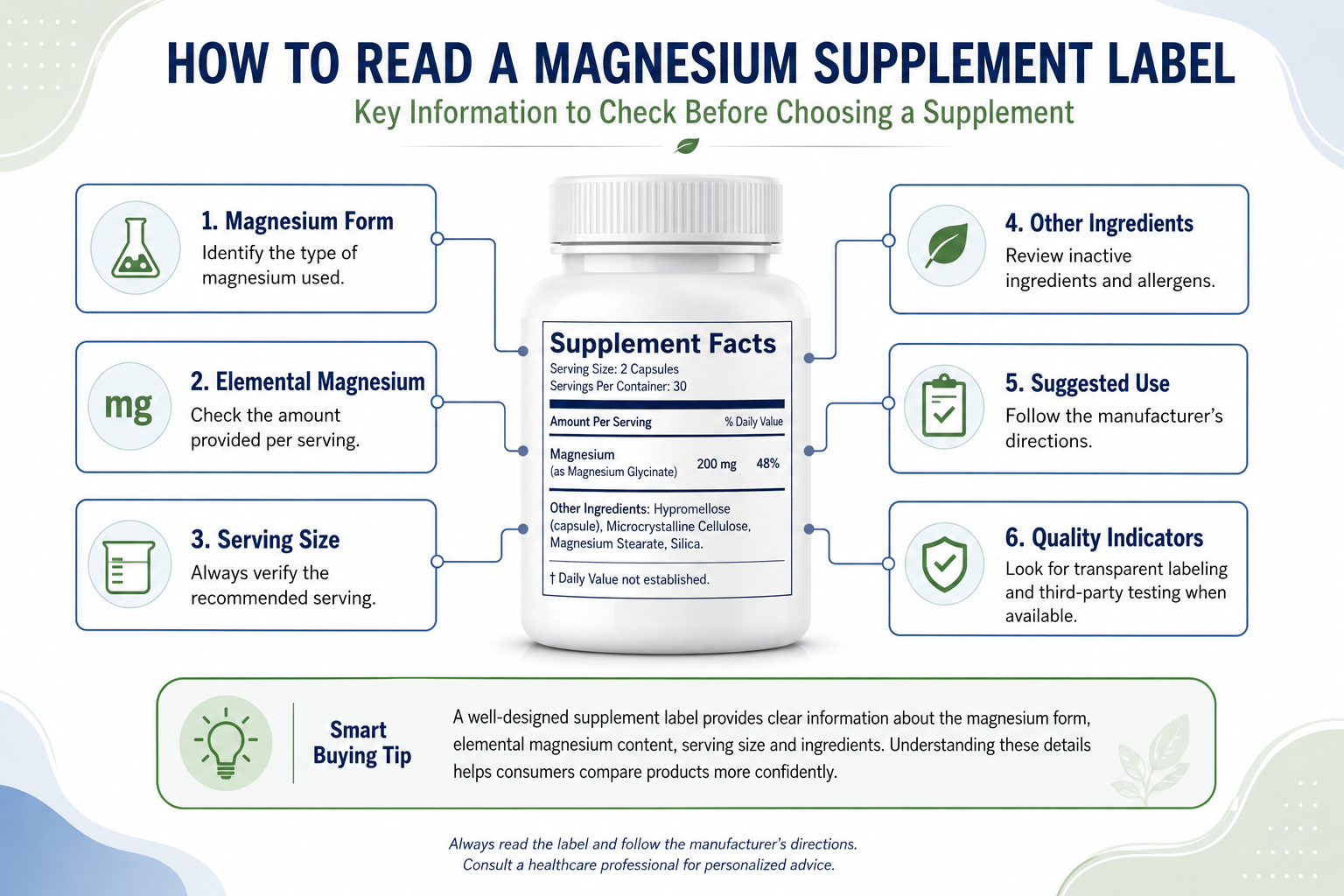
Infographic explaining how to read a magnesium supplement label, including magnesium form, elemental magnesium, serving size, other ingredients, suggested use and quality indicators.
A supplement label should provide enough information to compare the formula, dose, serving size and additional ingredients.
READING THE LABEL

Elemental magnesium is the key number

The total weight of a magnesium compound is not the same as the amount of elemental magnesium it provides. For example, a label may list a magnesium compound by name while separately stating how many milligrams of magnesium are supplied per serving.

When comparing products, use the elemental magnesium value rather than assuming that the largest total ingredient weight represents the highest usable amount.

MARKETING LANGUAGE

Claims that require closer inspection

Phrases such as “maximum strength,” “high absorption,” “clinical grade,” “premium formula” or “advanced blend” may sound persuasive, but they are not substitutes for clear label information.

Check the evidence

Look for specific information about the formula rather than broad promotional wording.

Check the dose

More magnesium is not always appropriate, especially when the serving size is large.

Check the full formula

Additional ingredients may influence tolerability, suitability and product quality.

CHAPTER 06

Safety Considerations

Magnesium supplements are generally well tolerated when used appropriately, but they are not suitable for everyone.

Magnesium obtained naturally from food is unlikely to cause adverse effects in healthy individuals. Supplements, antacids and laxatives, however, can provide substantially larger amounts and require more careful use.

The appropriate dose depends on dietary intake, the reason for using the supplement, kidney function, medications and individual tolerability. Taking more than the label recommends does not guarantee a greater benefit.

Anyone with a medical condition, persistent symptoms or regular medication use should discuss supplementation with a qualified healthcare professional.

COMMON SIDE EFFECTS

Digestive effects are the most frequently reported

Supplemental magnesium may cause diarrhea, nausea or abdominal discomfort, particularly at higher doses. The likelihood and intensity of these effects can vary between magnesium forms and between individuals.

If a supplement repeatedly causes digestive discomfort, stop using it and seek professional advice rather than continuing to increase or adjust the dose independently.

01

Diarrhea or loose stools

02

Nausea

03

Abdominal cramping

04

General digestive discomfort

WHO SHOULD USE EXTRA CAUTION?

Some situations require professional guidance

01

Reduced Kidney Function

The kidneys help remove excess magnesium. People with impaired kidney function may have a greater risk of magnesium accumulation and should not self-supplement without medical guidance.

02

Regular Medication Use

Magnesium can affect the absorption or action of certain medicines. A pharmacist or healthcare professional can advise whether dose separation or another precaution is needed.

03

Pregnancy or Breastfeeding

Nutritional needs can change during pregnancy and breastfeeding. Supplement selection and dosage should be discussed with an appropriate healthcare professional.

04

Persistent or Unexplained Symptoms

Fatigue, cramps, poor sleep and other nonspecific symptoms can have many causes. They should not automatically be assumed to indicate low magnesium.

MEDICATION INTERACTIONS

Timing can matter

Magnesium may bind to certain medicines in the digestive tract and reduce their absorption. This is particularly relevant to some antibiotics and medicines used for bone health.

Do not guess the correct interval between a supplement and a medicine. Follow the medicine instructions or ask a pharmacist, because the required separation can vary.

RESPONSIBLE USE CHECKLIST

Before starting a magnesium supplement

Review your current dietary intake.

Read the full Supplement Facts panel.

Follow the recommended serving.

Check for duplicate magnesium products.

Consider medicines and health conditions.

Stop and seek advice if adverse effects occur.

COMMON QUESTIONS

Frequently Asked Questions

Clear answers to common questions about magnesium intake, supplementation, timing and safety.

Is one form of magnesium best for everyone?

No single form is universally best. Magnesium compounds differ in elemental magnesium content, solubility and gastrointestinal tolerance. The most suitable option depends on individual needs, the intended use, tolerance, medications and professional advice.

Can most people obtain enough magnesium from food?

Many people can meet their magnesium needs through a varied diet containing seeds, nuts, legumes, whole grains and leafy green vegetables. However, actual intake depends on food choices, portion sizes, health conditions and individual nutritional needs.

Does everyone need a magnesium supplement?

No. Magnesium is essential, but that does not mean everyone needs supplemental magnesium. Supplements may be considered when dietary intake is insufficient or when recommended for an individual nutritional or medical reason.

Should magnesium be taken in the morning or at night?

There is no single required time for everyone. The product directions, individual routine, digestive tolerance and any medication-separation requirements are more important than a universal morning-or-evening rule.

Consistency may be easier when the supplement is taken at the same appropriate time each day.

Can magnesium supplements support sleep?

Magnesium is involved in normal nerve and muscle function, but evidence concerning supplementation and sleep outcomes is not equally strong for every person or situation.

Persistent sleep problems should not automatically be attributed to magnesium intake and may require professional assessment.

What does elemental magnesium mean?

Elemental magnesium is the amount of magnesium supplied by the magnesium compound. It is the most useful number for comparing doses between products.

The total weight of magnesium glycinate, citrate or another compound is not the same as the amount of elemental magnesium provided.

Can magnesium cause digestive side effects?

Yes. Supplemental magnesium can cause diarrhea, nausea, abdominal cramping or digestive discomfort, particularly when the dose is high or the formulation is poorly tolerated by the individual.

Repeated or significant adverse effects are a reason to stop using the product and seek professional advice.

Can magnesium interact with medications?

Yes. Magnesium may reduce the absorption of certain medicines, including some antibiotics and medications used for bone health. The appropriate separation interval depends on the medicine.

A pharmacist or healthcare professional should be consulted rather than relying on a general timing rule.

Who should speak with a healthcare professional first?

Professional guidance is particularly important for people with reduced kidney function, regular medication use, pregnancy, breastfeeding, persistent symptoms or multiple supplement use.

Does a higher dose mean a better supplement?

No. A higher dose may increase the likelihood of side effects and might not be appropriate for the individual's needs. Product transparency, formulation, elemental magnesium, serving size and tolerability should all be considered.

SCIENTIFIC SOURCES

References

This guide was developed using authoritative nutrition resources, government databases and peer-reviewed scientific literature.

01

NIH Office of Dietary Supplements

Magnesium: Fact Sheet for Health Professionals. Information on magnesium functions, dietary sources, recommended intake, deficiency, safety and medication interactions.

View source
02

NIH Office of Dietary Supplements

Magnesium: Consumer Fact Sheet. Plain-language information about magnesium needs, food sources, supplements and safety.

View source
03

USDA FoodData Central

United States Department of Agriculture database containing nutrient-composition information for foods, including magnesium values.

View source
04

National Academies of Sciences

Dietary Reference Intakes for calcium, phosphorus, magnesium, vitamin D and fluoride. Scientific basis for magnesium intake recommendations and safety limits.

View source
05

Arab et al. — Systematic Review

The Role of Magnesium in Sleep Health. A systematic review examining observational and clinical-trial evidence concerning magnesium status, supplementation and sleep outcomes.

View study
06

Mah and Pitre — Systematic Review

Oral magnesium supplementation for insomnia in older adults. Review of randomized trials evaluating sleep outcomes.

View study