HAIR & SCALP

Hair Thinning in Women: Common Causes and What to Consider

Hair thinning is common in women and can become more noticeable with age. Hormonal changes, genetics, stress, nutrition and changes in the natural hair growth cycle can all play a role.

Understanding what may be contributing to thinning hair is an important first step before deciding which hair and scalp care options may be appropriate for you.
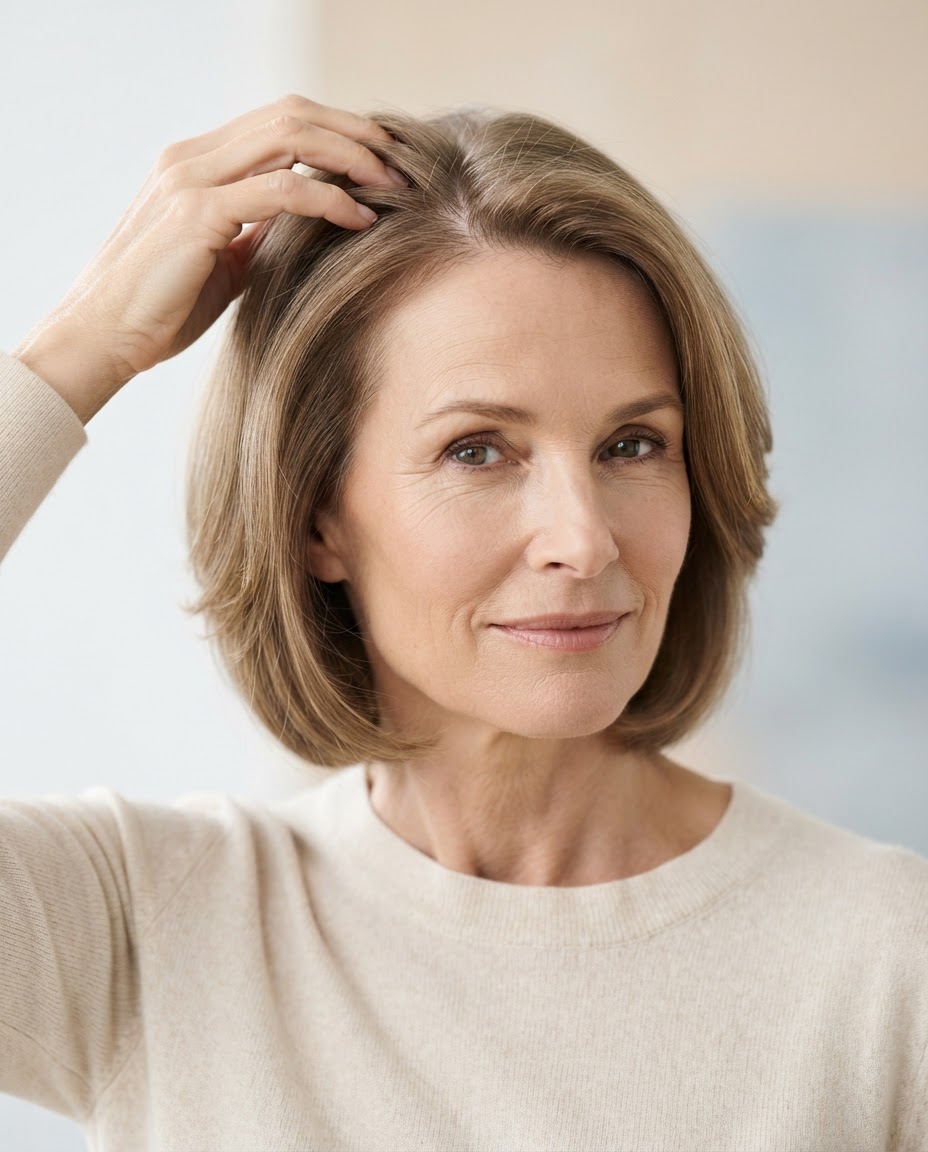
Evidence-informed guide  •  Hair & Scalp  •  MyVitalChoice

Why Does Hair Become Thinner?

Hair is constantly renewing itself. Each hair follicle moves through a natural cycle that includes periods of active growth, transition, rest and shedding.

When this balance changes, more hairs may enter the resting or shedding phases, or individual follicles may gradually produce finer strands. Over time, these changes can make the hair appear less dense.

01

Growth

During the active growth phase, the follicle produces a new hair shaft. This is normally the longest stage of the cycle.

02

Transition

Hair growth slows as the follicle enters a short transitional phase and prepares for a period of rest.

03

Rest

The follicle remains relatively inactive for a period of time while the existing hair stays in place.

04

Shedding

The older hair is eventually released, allowing the follicle to begin another cycle.

Because individual follicles are at different stages at the same time, some daily shedding is normal. Hair thinning becomes more noticeable when the usual balance of the cycle changes or when newly produced hairs become progressively finer.

This is also why there is no single explanation for every case of thinning hair. Age, genetics, hormonal changes, stress, nutrition and certain health conditions can influence the hair cycle in different ways.

KEY POINT

Hair thinning and normal daily shedding are not necessarily the same thing. Changes in hair density can develop gradually and may involve both the number of hairs growing and the thickness of individual strands.

Common Factors Associated With Hair Thinning in Women

Hair thinning can have more than one contributing factor. Genetics, age, hormonal changes, stress, nutrition and certain health conditions may all influence hair density and the natural hair growth cycle.
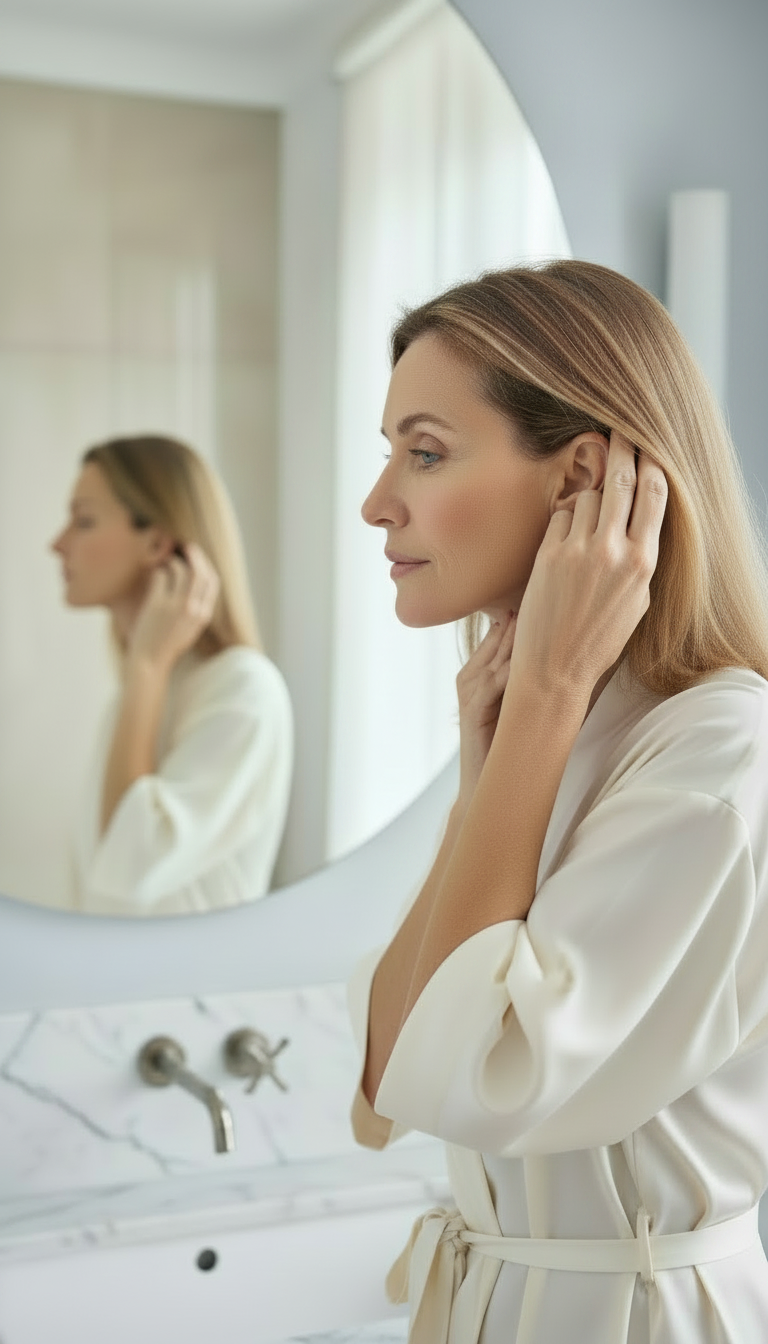
Woman examining her hair and scalp as part of her daily hair care routine
01

Hormonal Changes

Changes in hormone levels, including those occurring around menopause, can influence the hair growth cycle and may contribute to changes in hair density and texture.

02

Genetics & Age

Female-pattern hair loss has a genetic component and becomes more common with age. Individual hair strands may gradually become finer and overall density can decrease.

03

Stress

Significant physical or emotional stress can temporarily shift more hairs into the resting phase, sometimes resulting in increased shedding several months later.

04

Nutrition

Inadequate intake or deficiency of nutrients such as iron, protein, zinc or certain vitamins can sometimes contribute to changes in hair growth and appearance.

05

Hair & Scalp Care

Frequent heat exposure, chemical processing, tight hairstyles and repeated tension may contribute to hair breakage or, in some cases, traction-related hair loss.

06

Health & Medications

Thyroid disorders, anemia, certain medications and other health conditions may also affect hair growth. Persistent, sudden or unexplained hair loss deserves professional evaluation.

IMPORTANT TO REMEMBER

Hair thinning does not always have a single cause. In some women, several factors may be present at the same time, which is why understanding the broader context is important before choosing a hair-care approach.

CONSIDERING A HAIR SERUM?

What Should You Look for Before Choosing One?

Hair serums can be part of a broader scalp and hair-care routine, but formulas vary considerably. Ingredients, intended use, application method and the type of hair concern being addressed are all worth comparing before choosing a product.

We reviewed one hair serum developed specifically for women concerned about thinning hair, including its formula, key ingredients and how it is designed to be used.

Explore Our Hair Serum Pick
Review the ingredients, product features and application details before deciding whether it fits your routine.

Hair Thinning and Hair Breakage Are Not the Same

Hair can look less dense for different reasons. Two common situations are true hair thinning and hair breakage, and they are not necessarily caused by the same processes.

HAIR THINNING

Changes Begin at the Follicle

Hair thinning generally involves changes in the number, density or diameter of hairs growing from the scalp.

In some forms of hair loss, individual follicles may gradually produce finer strands, making the scalp appear more visible over time.

• Reduced overall density • Finer individual strands • More visible scalp • Gradual changes over time
HAIR BREAKAGE

Damage Occurs Along the Hair Shaft

Breakage happens when the hair shaft becomes damaged and snaps before reaching its natural shedding stage.

Heat styling, chemical treatments, friction, dryness and repeated mechanical stress can all contribute to breakage.

• Short broken hairs • Uneven lengths • Dry or fragile strands • Damage along the hair shaft
WHY THIS MATTERS

A product designed to improve the condition or appearance of the hair shaft is not necessarily addressing the same concern as a product intended for scalp care. Understanding the difference can help you choose products that better match your needs.

PRACTICAL NEXT STEPS

What Should You Consider If Your Hair Is Thinning?

Because hair thinning can have different causes, there is no single approach that is appropriate for everyone. Looking at changes in your hair, your general health and your current hair-care routine can help you make more informed choices.

01

Notice How Your Hair Is Changing

Consider whether thinning has developed gradually or appeared suddenly. Pay attention to increased shedding, changes in the width of your part, areas of lower density or changes in the thickness of individual strands.

02

Review Your Hair-Care Routine

Frequent heat styling, chemical processing, tight hairstyles and repeated tension can affect the condition of the hair. A gentler routine may help reduce unnecessary damage and breakage.

03

Consider Nutrition & General Health

Hair changes can sometimes accompany nutritional deficiencies, hormonal changes or health conditions. If thinning is persistent or unexplained, identifying an underlying factor may be more important than simply changing hair products.

04

Pay Attention to Scalp Care

The scalp is where hair follicles are located, so scalp care is an important part of a complete hair-care routine. Keeping the scalp clean and choosing products intended for scalp application can be useful considerations.

05

Compare Hair Serums Carefully

If you are considering a scalp or hair serum, look beyond the headline claims. Compare the ingredient list, intended use, application instructions and whether the formula is designed for the specific concern you want to address.

A SIMPLE RULE

Start with the concern, not the product. Understanding what is happening with your hair makes it easier to evaluate whether a particular hair-care product fits your needs.

HAIR & SCALP PICK

Looking for a Scalp Serum for Thinning Hair?

If a scalp serum is part of the routine you're considering, ingredients and formulation matter. Different products combine botanical extracts, peptides and other cosmetic ingredients in different ways.

We took a closer look at one serum formulated specifically for women concerned about thinning hair — including its ingredients, product features, application method and what to consider before buying.

See Our Hair Serum Pick
Explore the formula, ingredients and how the product is designed to be used.
HAIR & SCALP
Ingredient-focused review
Scalp-focused formula
Designed for women's hair care
Application details explained
Affiliate disclosure: MyVitalChoice may earn a commission if you purchase through links on our site, at no additional cost to you.
WHEN TO SEEK PROFESSIONAL ADVICE

When Should Hair Loss Be Evaluated?

Hair thinning is common, especially with age, but some patterns of hair loss deserve professional evaluation. A healthcare professional or dermatologist can help determine whether an underlying medical, hormonal or nutritional factor may be contributing.

01

Sudden Hair Loss

A noticeable increase in shedding over a short period of time may warrant further evaluation, particularly when there is no obvious explanation.

02

Patchy Hair Loss

Areas of clearly defined hair loss or bald patches are different from gradual diffuse thinning and should be assessed professionally.

03

Scalp Symptoms

Persistent itching, redness, scaling, pain, inflammation or other noticeable scalp changes may indicate a condition that requires appropriate diagnosis and treatment.

04

Other Health Changes

Hair loss accompanied by fatigue, unexplained weight changes, menstrual changes or other symptoms can sometimes be associated with broader health or hormonal factors.

!
IMPORTANT

Cosmetic hair-care products are not a substitute for medical diagnosis or treatment. If hair loss is persistent, sudden, severe or accompanied by other symptoms, professional evaluation can help identify the most appropriate next step.

OUR HAIR & SCALP PICK

Explore a Hair Serum Designed for Thinning Hair

If you are considering adding a scalp serum to your routine, we reviewed one option formulated specifically for women concerned about thinning hair.

Our review looks at the formula, key ingredients, how the serum is intended to be used and the main points worth considering before making a purchase.

Explore the Hair Serum
Formula See the featured ingredients
Use Understand how it is applied
Review See what to consider before buying
Affiliate disclosure: MyVitalChoice may earn a commission if you purchase through links on this page, at no additional cost to you. Our educational content and product evaluations are intended to help you make informed choices.
SCIENTIFIC REFERENCES

References

This article is intended for educational purposes and was developed using independent scientific and medical literature on the hair growth cycle, female-pattern hair loss, telogen effluvium, nutrition and hormonal changes.

01

Stenn KS, Paus R. Controls of Hair Follicle Cycling. Physiological Reviews. 2001;81(1):449–494.

View scientific source →
02

Herskovitz I, Tosti A. Female Pattern Hair Loss. International Journal of Endocrinology and Metabolism. 2013;11(4):e9860.

View scientific source →
03

Malkud S. Telogen Effluvium: A Review. Journal of Clinical and Diagnostic Research. 2015;9(9):WE01–WE03.

View scientific source →
04

Almohanna HM, Ahmed AA, Tsatalis JP, Tosti A. The Role of Vitamins and Minerals in Hair Loss: A Review. Dermatology and Therapy. 2019;9(1):51–70.

View scientific source →
05

Menopause and hair loss in women: Exploring the hormonal transition. Maturitas. 2025.

View scientific source →
Medical information notice:

The information provided by MyVitalChoice is for educational purposes only and is not intended to diagnose, treat, cure or prevent any disease. Individual causes of hair loss can vary. Persistent, sudden or unexplained hair loss should be discussed with a qualified healthcare professional.