Scalp serums have become a popular addition to hair-care routines, particularly for women concerned about thinning hair. But formulas can differ considerably — and the words on the front of the bottle do not always tell you what matters most.
Understanding the ingredients, intended use and application method can make it easier to compare products and choose a serum that fits your hair and scalp-care goals.
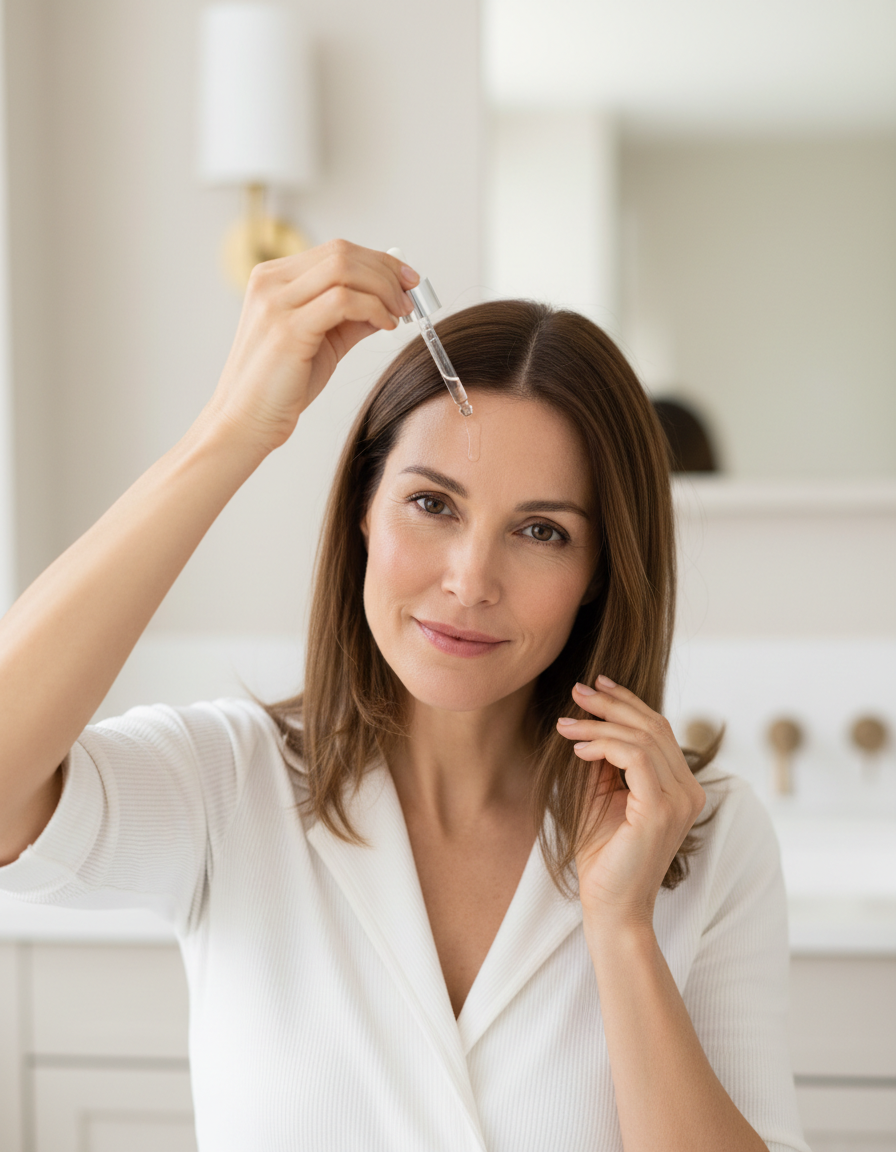
A scalp serum is a topical product designed to be applied directly to the scalp rather than only to the lengths of the hair. Depending on the formula, it may contain botanical extracts, peptides, humectants, antioxidants or other cosmetic ingredients.
Unlike traditional conditioners or finishing serums, scalp serums are generally intended to remain in contact with the scalp for an extended period of time, often without rinsing.
The formula is placed close to the roots, where it can remain in contact with the scalp rather than simply coating the hair shaft.
Many scalp serums are designed with lightweight textures so they can be used regularly without leaving the hair excessively oily or heavy.
Formulas often combine several cosmetic ingredients selected for scalp care, hydration, conditioning or the appearance of healthier and fuller-looking hair.
The term "hair serum" can be confusing because it is used for very different types of products. Some serums are designed mainly to smooth the hair shaft, reduce frizz or add shine, while others are formulated specifically for direct scalp application.
For women concerned about thinning hair, this distinction matters. A serum intended for the scalp should be evaluated differently from a cosmetic finishing serum used only on the lengths and ends.
"Scalp serum" does not describe one standard formula. Products can differ substantially in ingredients, concentration, texture, intended use and application instructions, which is why comparing formulas is more useful than relying on the product name alone.
A good starting point is to look beyond marketing phrases such as “hair growth” or “thickening” and focus instead on the formula, intended use and how the product fits into your routine.
No single cosmetic serum is appropriate for every cause of hair thinning, but a few practical criteria can make product comparisons much easier.
Check whether the product is actually designed for direct scalp application and whether its purpose matches the concern you want to address.
A complete ingredient list makes it easier to understand what the formula contains and to identify botanical extracts, peptides, humectants or other relevant ingredients.
Consider how frequently the serum needs to be used, whether it is leave-in or rinse-off and whether the application method is realistic for your daily routine.
Products applied directly to the scalp should also be evaluated for comfort and tolerability, especially if your skin is sensitive or easily irritated.
Be cautious with products that promise dramatic or guaranteed results. Hair changes often occur gradually, and cosmetic products cannot address every underlying cause of hair loss.
A formula only fits your routine if you are comfortable using it consistently. Texture, frequency of application and ease of use can matter just as much as the ingredient list.
Rather than asking only whether a serum “works,” ask what it contains, what it is designed to do, how it should be used and whether those characteristics match your specific hair and scalp concerns.
Scalp serums can contain very different combinations of ingredients. Some are included primarily for conditioning and hydration, while others have been studied for their potential role in scalp or hair biology.
Finding an ingredient in a formula does not automatically mean that the finished product will produce a particular result. Concentration, formulation, application and the quality of the available evidence all matter.
Rosemary-derived preparations are commonly found in scalp and hair-care products. Rosemary oil has also been investigated clinically in relation to androgenetic hair loss, although the evidence remains much more limited than for established medical treatments.
Caffeine is used in a variety of topical scalp products and has been studied in laboratory and clinical settings for possible effects related to hair follicles. Research is ongoing, and results from one formulation should not automatically be applied to every caffeine-containing product.
Peptides are short chains of amino acids used in many modern cosmetic formulations. Different peptides have different properties, so the word “peptide” alone does not tell you how a particular ingredient has been studied or what role it plays in the formula.
Ginseng, green tea, red clover, Centella asiatica and other botanical extracts can appear in scalp-serum formulas. Their functions and supporting evidence vary considerably depending on the extract and formulation.
Ingredients such as hyaluronic acid and other humectants can help support hydration and the cosmetic condition of the scalp and hair. These functions are different from treating an underlying cause of hair loss.
Some formulas contain proprietary or branded cosmetic complexes that combine several compounds. These may have laboratory, manufacturer-sponsored or clinical data, but the strength of evidence can vary.
A study involving one ingredient does not automatically demonstrate that every serum containing that ingredient will produce the same result. The concentration, delivery system, combination of ingredients and way the finished product is used can all be different.
This is why ingredient research can help you understand a formula, but it should not be treated as proof of the performance of a particular finished product.
Products called serums, oils and treatments can look similar on a shelf, but they are not necessarily designed for the same purpose. The biggest difference is often where the product is applied and what it is intended to do.
Designed primarily for direct application to the scalp and roots. These formulas are often lightweight and intended to remain in contact with the scalp.
Oils are commonly used to condition the hair, reduce dryness or improve softness and shine. Some are also applied to the scalp, depending on the product and routine.
A traditional finishing serum is normally applied to the lengths and ends of the hair to improve appearance, smoothness and manageability.
This distinction becomes particularly important when searching for a hair serum for thinning hair. A product that makes the lengths look smoother or shinier may improve the appearance of the hair, but that does not make it a scalp-focused formula.
If your goal is to incorporate a serum into a scalp-care routine, check the application instructions. A product intended for this purpose should clearly explain how and where it should be applied.
Before comparing ingredients, check the label or instructions: Is the product actually intended to be applied directly to the scalp? This simple distinction can eliminate many products that do not match what you are looking for.
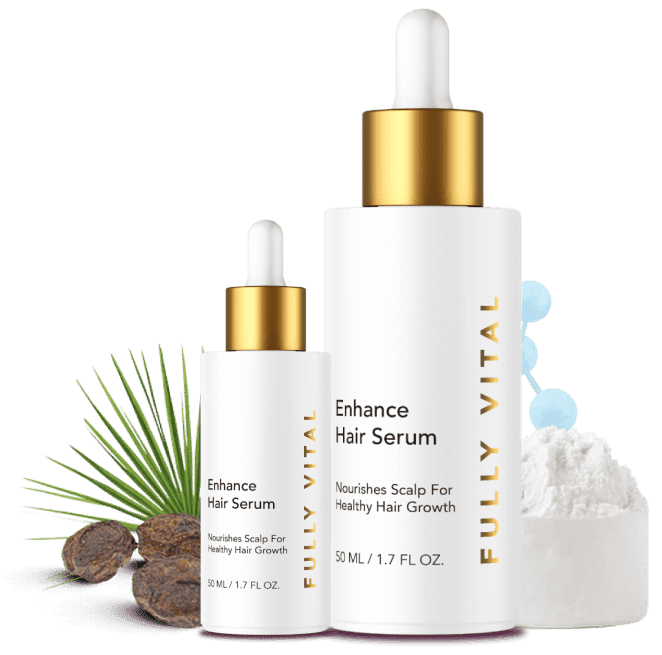
After looking at the characteristics that can help distinguish a scalp-focused serum, FullyVital is one option worth considering for women looking to add a topical serum to their hair and scalp-care routine.
According to the manufacturer, the formula combines multiple cosmetic ingredients, including rosemary, caffeine, peptides and botanical extracts, and is designed to be applied directly to areas of the scalp where thinning is a concern.
Application instructions vary between formulas, so the directions provided with a specific product should always come first. In general, scalp serums are designed to be applied directly to the scalp rather than distributed mainly through the lengths of the hair.
Technique and consistency can also matter. Applying more product than recommended does not necessarily provide a greater benefit and may simply make the scalp or hair feel heavy.
Separate the hair to expose the areas of the scalp where you intend to apply the serum. This helps place the product on the scalp rather than primarily on the hair strands.
Use the amount and frequency recommended for the specific formula. Depending on the product, application may involve a dropper, precision tip or another scalp-focused applicator.
If the product instructions recommend it, gently distribute the serum over the intended area with clean fingertips. Vigorous rubbing or scratching is unnecessary.
Hair changes occur over much longer periods than a single application. If you choose to use a scalp serum, following the recommended routine consistently is more useful than frequently changing products or using excessive amounts.
If you decide to use a scalp serum, follow the product's recommended application rather than assuming that using more will produce faster results. Hair biology works on a much longer timeline than most everyday skin or hair-care effects.
Hair products can influence different things — and those changes should not all be interpreted in the same way. A serum may improve the feel or appearance of the hair relatively quickly, while changes involving the hair-growth cycle generally occur over a much longer period.
It is also important to distinguish between cosmetic improvement, reduced breakage, changes in shedding and true changes in hair density.
Hydrating or conditioning ingredients may help hair feel softer, smoother or better conditioned. These cosmetic changes can sometimes be noticed before any change related to the hair-growth cycle.
Better conditioning and gentler hair care may reduce damage to the hair shaft. Less breakage can make hair look healthier or fuller, but this is different from creating new hair follicles.
Shedding can fluctuate for many reasons, including stress, illness, hormonal changes and the normal hair cycle. A change in daily shedding should not automatically be attributed to a single cosmetic product.
Changes in visible density take time because hair grows slowly. Evaluating density is more meaningful over months than over days or a few applications.
Hair follicles move through growth, transition and resting phases. Because of this, meaningful changes involving new hair growth or visible density cannot realistically be judged after only a few days of use.
No cosmetic scalp serum can guarantee hair growth. Results can vary considerably between individuals, and a product cannot correct every possible cause of thinning hair.
A scalp serum can be part of a hair-care routine, but thinning hair does not always begin with the scalp surface itself. Hormonal changes, genetics, nutritional deficiencies, illness, stress and certain medical conditions can all influence the hair-growth cycle.
If hair loss is sudden, severe, patchy or accompanied by other symptoms, it is more important to understand the underlying cause than to keep changing cosmetic products.
A noticeable increase in shedding over a short period of time may occur after illness, major stress, medication changes or other physiological events.
Clearly defined areas of hair loss are different from gradual diffuse thinning and may require a different type of evaluation.
Persistent redness, scaling, pain, intense itching, sores or inflammation can indicate a scalp condition that should not be managed only with cosmetic products.
Hair loss accompanied by fatigue, unexplained weight changes, menstrual changes or other symptoms may justify looking at general health factors as well.
Inadequate intake or deficiency of nutrients such as iron, protein, zinc and certain vitamins may contribute to hair changes in some individuals.
If thinning continues to progress despite changes in routine, understanding the pattern and possible cause becomes increasingly important.
Different forms of hair loss can look similar at first, but they do not necessarily have the same cause or require the same approach. A healthcare professional or dermatologist can evaluate the pattern of hair loss, scalp condition, medical history and other factors when appropriate.
Cosmetic scalp serums are not a substitute for diagnosis or medical treatment. Persistent, sudden, severe or unexplained hair loss should be discussed with an appropriate healthcare professional.
If you are looking for a scalp-focused serum to add to your routine, FullyVital is one option we reviewed based on its intended use, ingredient profile and application method.
Designed to be applied directly to areas of the scalp where thinning is a concern.
According to the manufacturer, the formula includes rosemary, caffeine, peptides and botanical extracts.
Intended to be incorporated into a consistent hair and scalp-care routine.
MyVitalChoice uses independent scientific literature to support educational content. References to ingredient research should not be interpreted as evidence that a specific finished cosmetic product will produce the same results.
Stenn KS, Paus R. Controls of Hair Follicle Cycling. Physiological Reviews. 2001;81(1):449–494.
View reference →Herskovitz I, Tosti A. Female Pattern Hair Loss. International Journal of Endocrinology and Metabolism. 2013;11(4):e9860.
View reference →Panahi Y, Taghizadeh M, Marzony ET, Sahebkar A. Rosemary oil vs minoxidil 2% for the treatment of androgenetic alopecia: a randomized comparative trial. Skinmed. 2015;13(1):15–21.
View reference →Fischer TW, Hipler UC, Elsner P. Effect of caffeine and testosterone on the proliferation of human hair follicles in vitro. International Journal of Dermatology. 2007;46(1):27–35.
View reference →Almohanna HM, Ahmed AA, Tsatalis JP, Tosti A. The Role of Vitamins and Minerals in Hair Loss: A Review. Dermatology and Therapy. 2019;9(1):51–70.
View reference →Malkud S. Telogen Effluvium: A Review. Journal of Clinical and Diagnostic Research. 2015;9(9):WE01–WE03.
View reference →Studies involving individual ingredients, specific concentrations or experimental formulations cannot automatically be extrapolated to other cosmetic products containing the same ingredient. MyVitalChoice distinguishes between research on an ingredient and evidence for a finished product.
The information on this page is provided for educational and informational purposes only and is not intended to diagnose, treat, cure or prevent any disease or medical condition.
Hair thinning and hair loss can have many causes. If you experience persistent, sudden, severe, patchy or unexplained hair loss, or scalp symptoms such as inflammation, pain or significant irritation, consider discussing them with an appropriate healthcare professional.